How to set up
Learn how to set it up, customize it, and make the most of Order Status Page (OSP) Upsell feature.
What is Order Status Page (OSP) Upsell?
The Order Status Page Upsell (OSP Upsell) lets you show additional product offers on the Order Status Page (the confirmation page customers see after checkout).
- For merchants: Capture more revenue by suggesting complementary items even after checkout is complete.
- For customers: Convenient way to add missed or related items while reviewing their order.
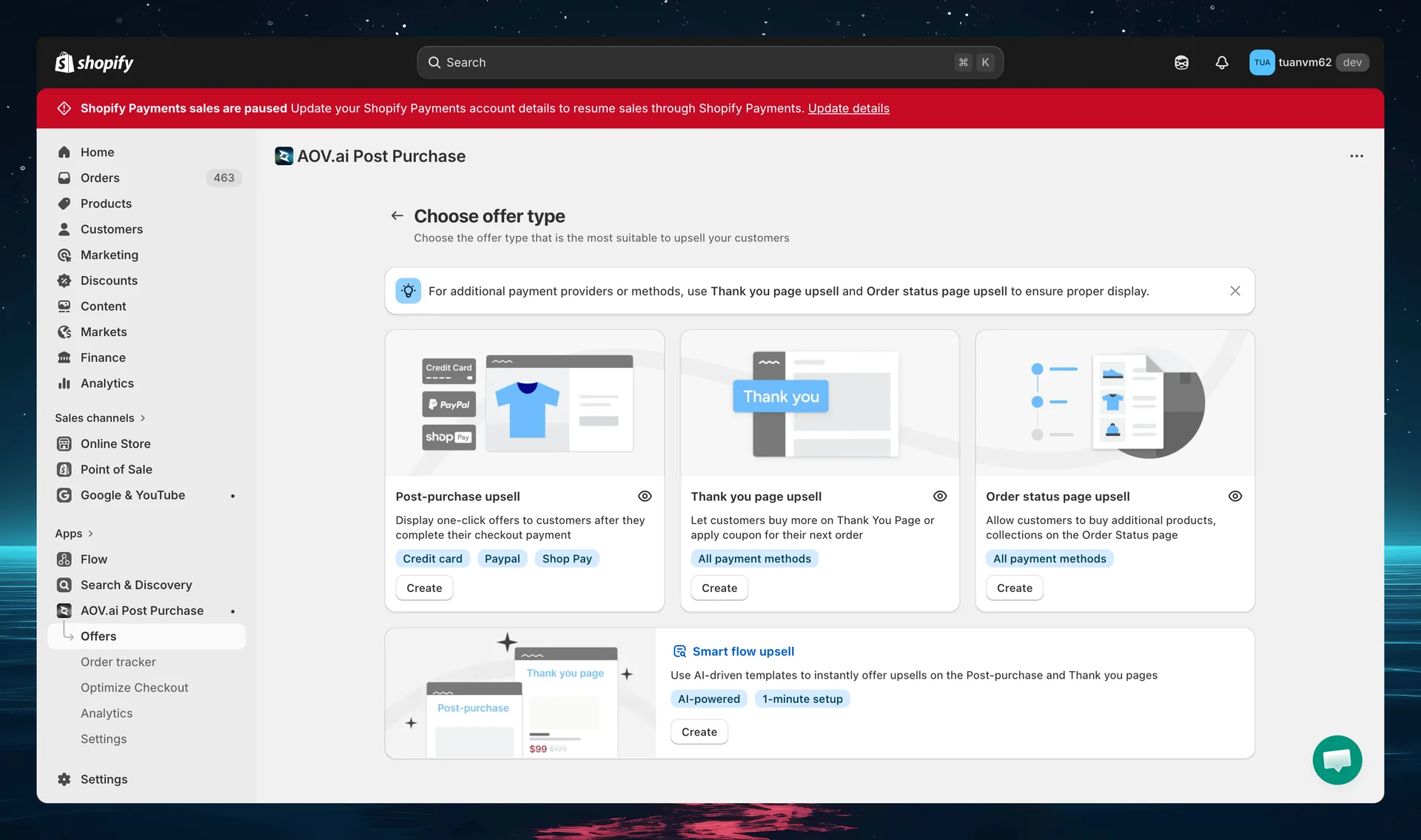
Why to use this feature?
Increase Average Order Value (AOV)
Suggest complementary or frequently paired products that naturally fit with what the customer just bought. For example, offer a coffee grinder after someone purchases a coffee machine.
Provide Seamless Convenience
Keep customers in the same confirmation flow while giving them the option to add more items. They don't have to browse your store again, it's quick and feels effortless.
Boost Acceptance with Incentives
Use the free shipping badge or a countdown timer to give customers a reason to act now, making the offer more compelling without feeling pushy.
How to set up
Requirements before using
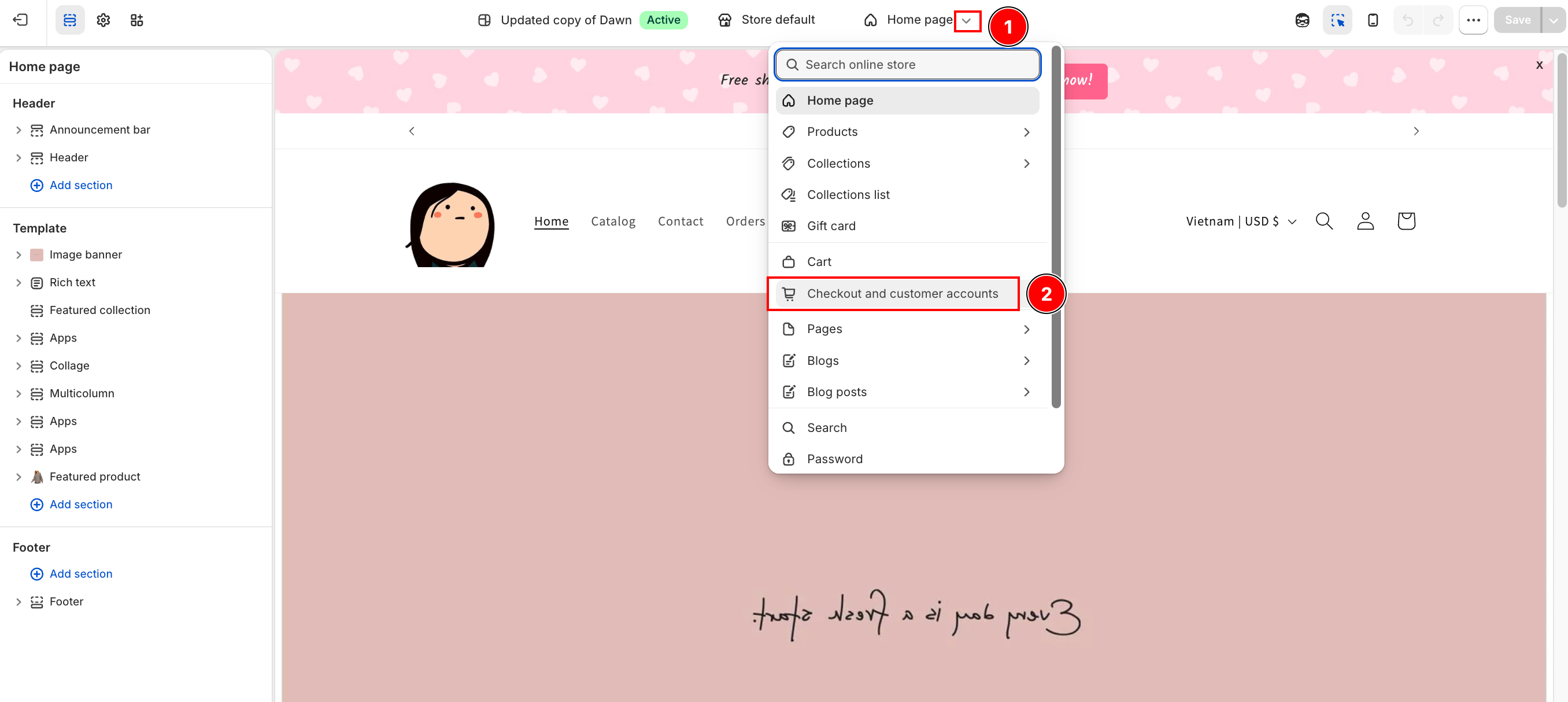
- Add the Order Status Page Upsell block in Shopify Admin → Online Store → Customize Theme → Checkout and customer accounts.
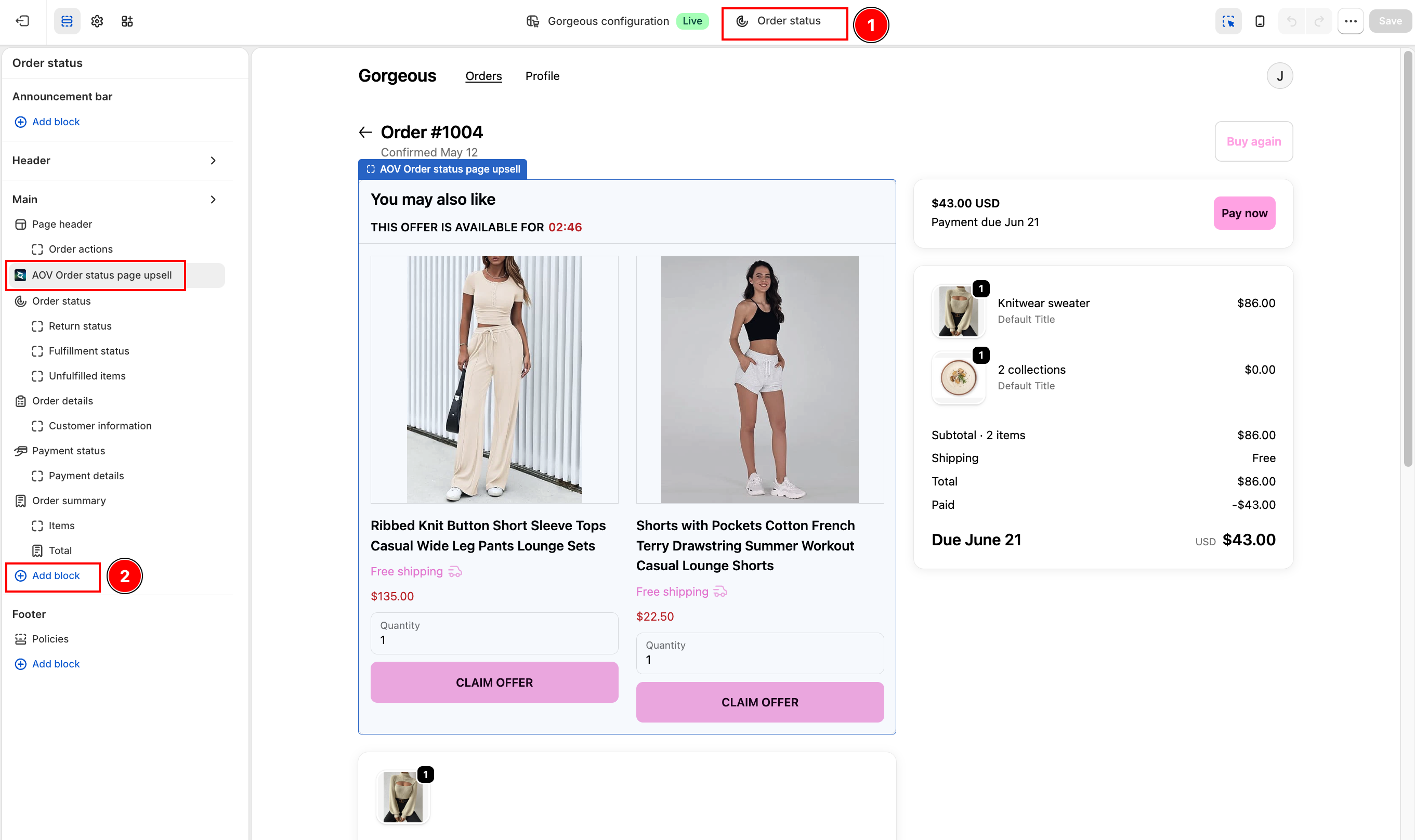
- Access the Order Status Page and add the app block to your desired position.
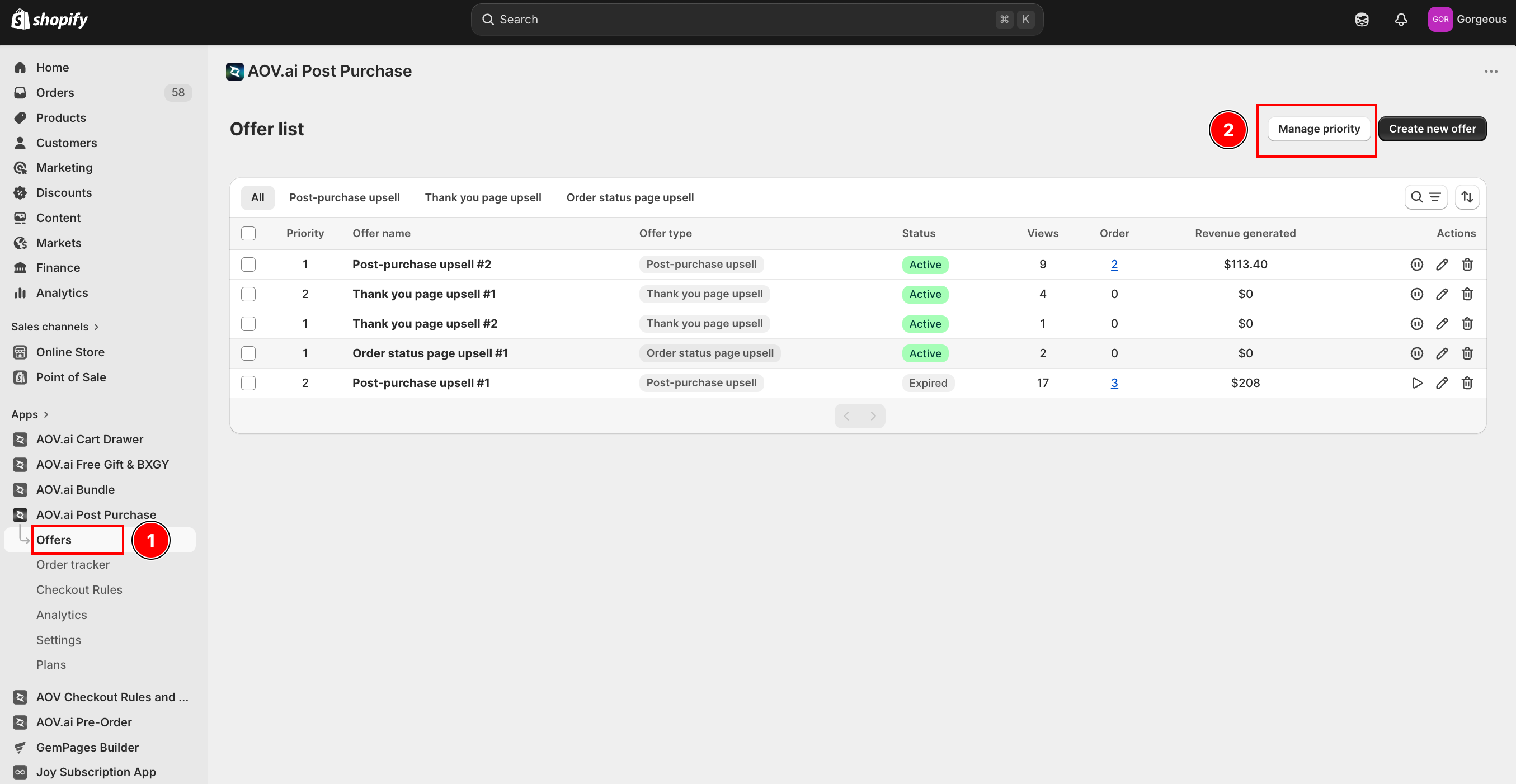
- Offers must be created in the Offers tab of the AOV.ai Post Purchase app.
- Only product upsells are supported. Coupons are not available here.
- No payment method restrictions apply.
Trigger condition
In this step, you define when your Order Status Page Upsell will appear.
Step 1: Enter offer details
- Offer name: Type a name to identify your campaign. This name is for you only; customers won't see it.
- Discount code (optional): Enter a code to help track or manage the offer.
Step 2: Add Trigger conditions
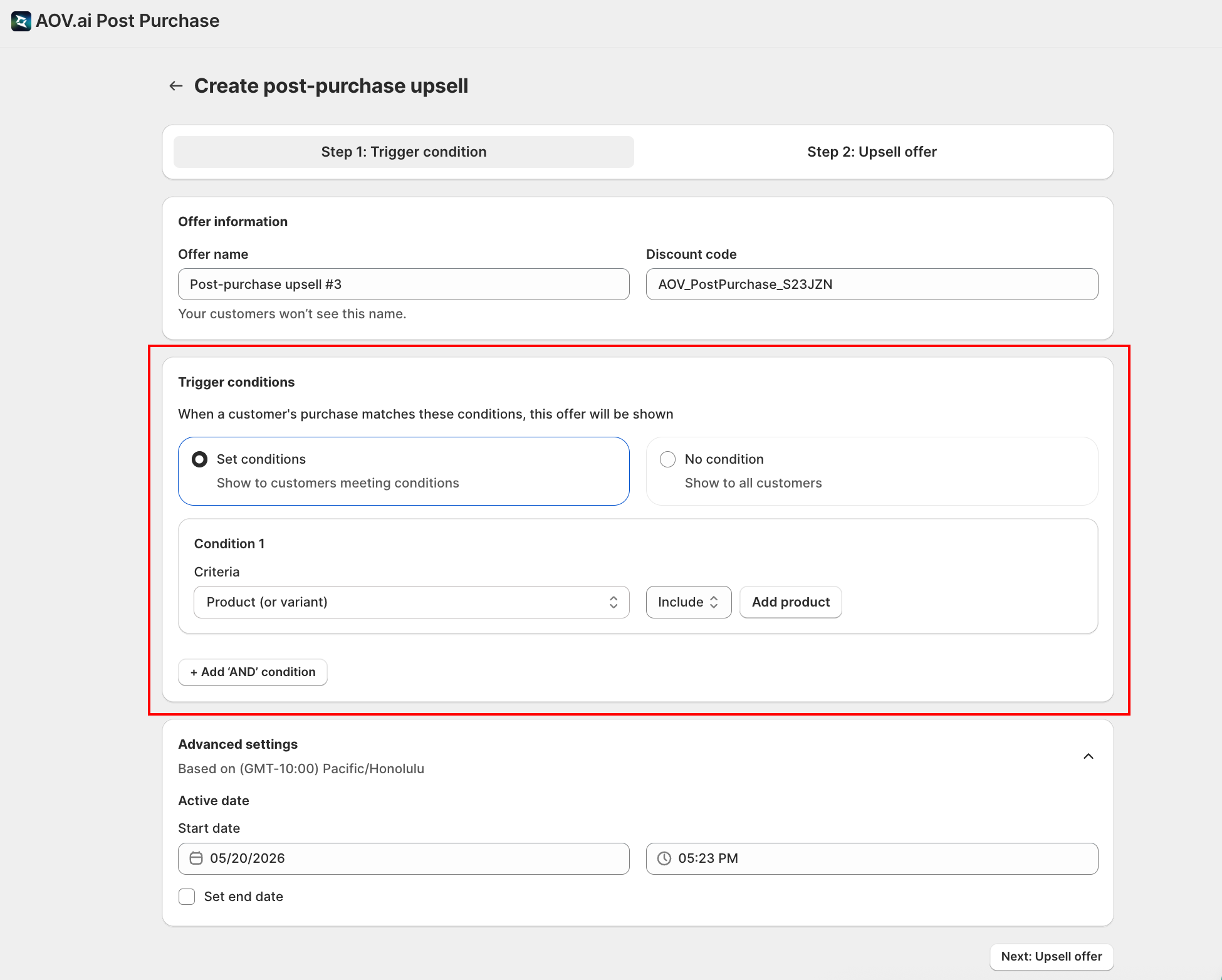
Under Trigger conditions, choose one the trigger conditions so that your post-purchase offers can be shown:
- Set conditions: Target specific purchases.
- No condition: Show the offer to all customers.
If you select Set conditions, you can build rules using criteria:
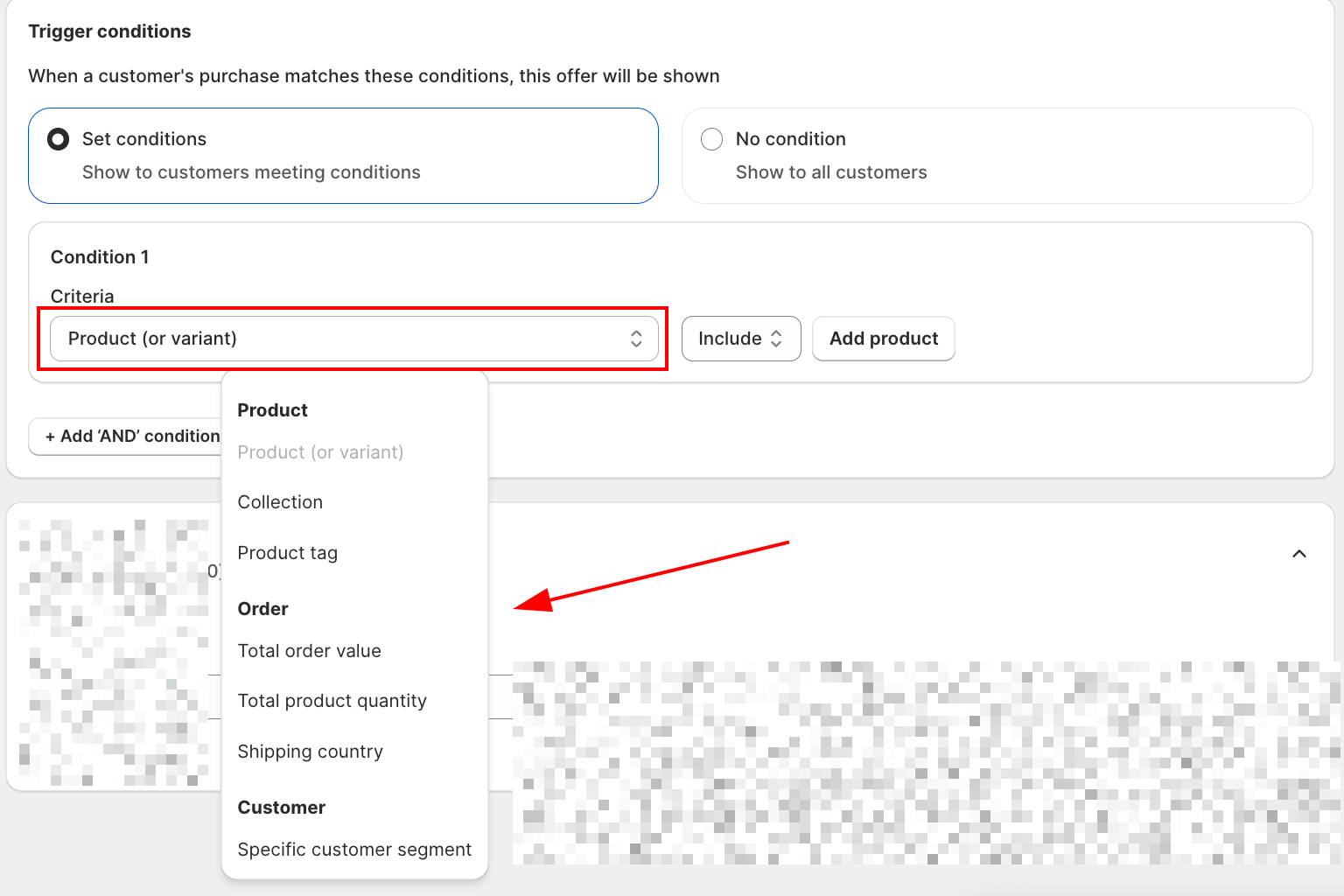
| Category | Condition | Description |
|---|---|---|
| Product | Product (or variant) | Show only if the order includes or excludes specific SKUs. |
| Collection | Target entire collections (e.g., "Winter Skincare"). | |
| Included product tag | Show only if products have ALL specified tags (AND logic). | |
| Excluded product tag | Hide the offer if any product in the order has one of the specified tags. | |
| Order | Total order value | Show only if cart subtotal reaches a threshold (e.g., orders above $50). |
| Total product quantity | Trigger based on the total number of items in the order. Supports ≥, ≤, and = operators. | |
Shipping fee NEW | Show only if the order's shipping fee is greater than, less than, or equal to a specific amount (≥, ≤, =). The amount field shows your store's currency symbol; enter 0 to target free-shipping orders. | |
| Shipping country | Restrict offers to customers shipping to specific countries. | |
| Customer | Specific customer segment | Target Shopify segments (e.g., returning buyers). |
For each condition:
- Select the Criteria from the dropdown.
- Choose an operator (Include / Exclude, or ≥ / ≤ / = for numeric fields).
- Add the value to match.
- Use + Add 'AND' condition to combine multiple rules.
Good to know: how Shipping fee is calculated
- Shipping fee is calculated after discounts are subtracted, so a free-shipping order reads as 0.
- Orders with no shipping fee at all (local pickup, digital products) also read as 0.
- A Less (≤) condition matches those orders too. Use Greater (≥) with a value above 0 if you want to exclude them.
- For multi-currency shops, the number you enter is compared directly against the order's amount, it is not converted, the same behavior as Total order value.
Decision help
- Start with No condition if you need to validate the layout and copy.
- Use Set conditions when the add-on should match items in the order (accessories, refills, size-ups).
Step 3: Advanced settings
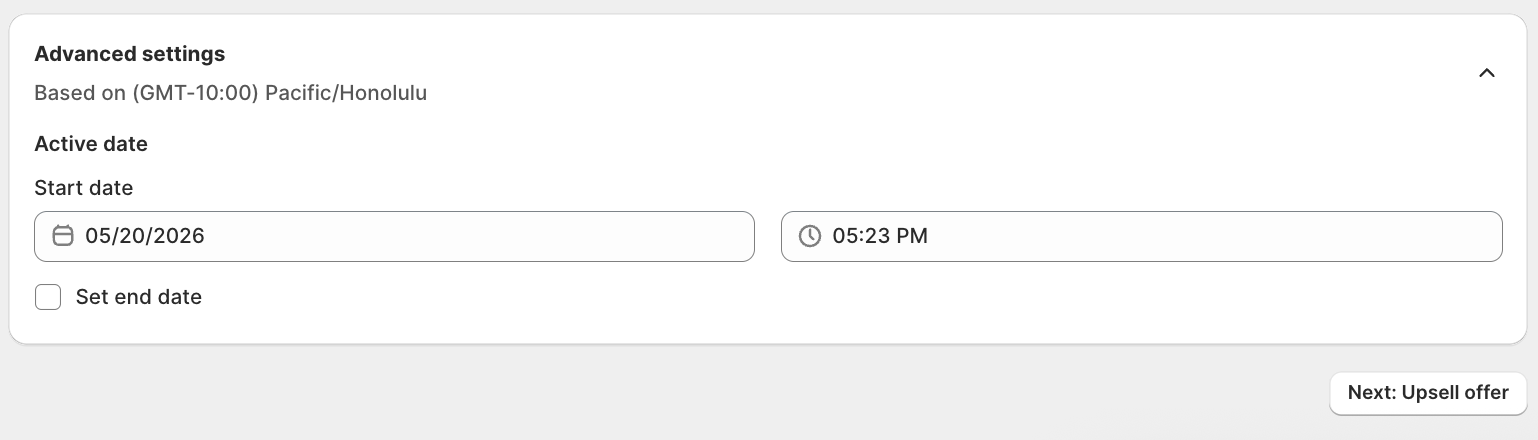
- Open Advanced settings.
- In Active date, pick a Start date and time. Use the timezone shown in the panel.
- (Optional) Select Set end date, then pick the end date and time.
- Select Save.
Upsell offer
Step 1: Adjust offer settings
After finishing Trigger condition, click Next: Upsell offer.
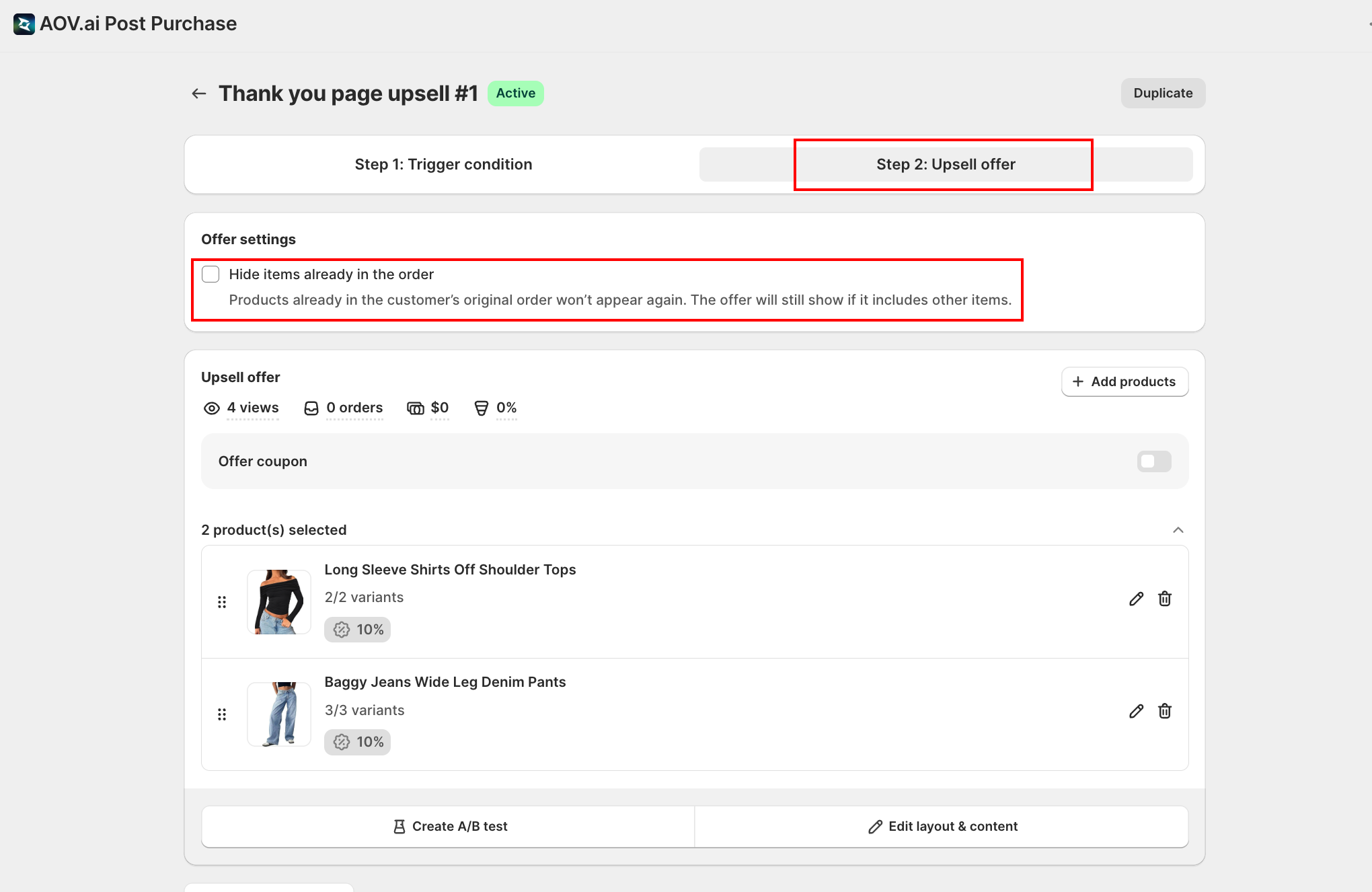
- Hide items already in the order: Check this box if you don't want to upsell items that the customer already purchased.
- If left unchecked, upsells can include duplicate items.
Step 2: Set up Upsell offer
- Click Add products and choose a source:
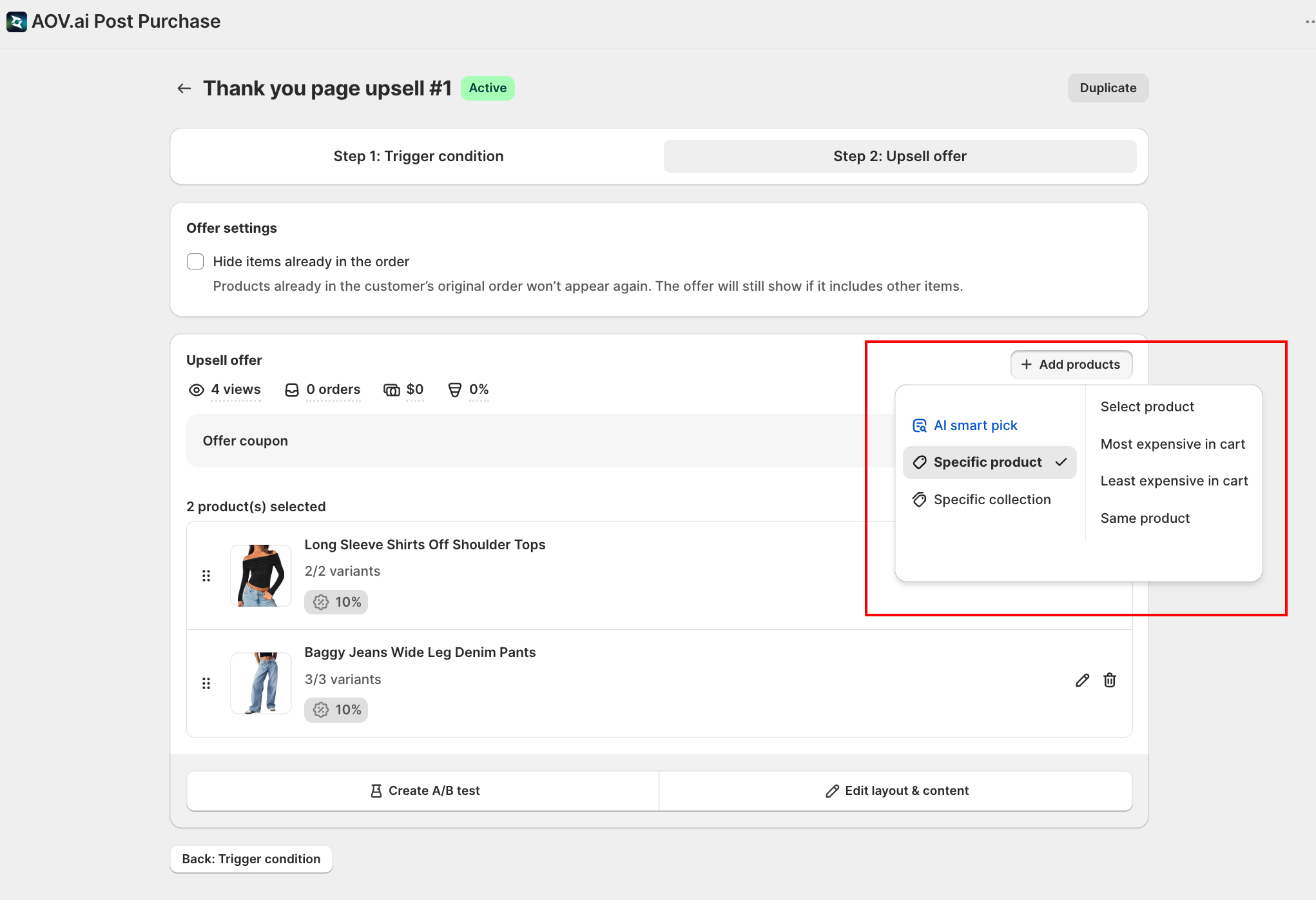
| Source | Option | Description |
|---|---|---|
| AI smart pick | - | Automatically suggests products based on order history and trending choices. Added products are labelled AI recommendation on the tile. |
| Specific product | Select product | Search and choose specific products or variants. |
| Most expensive in cart | Offers a discount on the highest-priced item in the order. No manual selection needed. | |
| Least expensive in cart | Offers a discount on the lowest-priced item. Useful for "add cheapest item free" promotions. | |
| Specific collection | - | Promote a predefined collection. |
Selecting variants for a product
When you choose Select product and pick a product that has variants, the picker shows a checkbox for every variant.
- Check the box next to the product name to select every variant. For a product with more variants than the picker has loaded yet, a hint appears under the product name: Select all N variants. This selection stays up to date automatically, if you add a new variant to that product in Shopify later, it's included in this offer too, with no need to come back and reselect.
- Check individual variant boxes instead to hand-pick specific ones. This selection is fixed to what you ticked. A variant added later in Shopify is not included automatically.
- For a product with many variants, the list loads a page at a time. Look for Showing X of Y variants with a Load more variants button underneath to fetch the rest.
Once added, the product tile shows how many variants are included, for example All 2048 variants when the whole product is selected, or 110/2048 variants when only specific variants are selected.
Good to know
- Shopify allows up to 2,048 variants on a single product. This is a Shopify platform limit, not a cap set by AOV.ai.
- Using Select all on a product with more than 100 variants makes that product render with Multiple dropdowns on the storefront (one dropdown per option, for example Size, Color, Material), even if Variant Picker display is set to Single dropdown, so buyers can still reach every variant. To keep a single dropdown for a large product, tick its variants individually instead of using Select all, a single dropdown supports up to 2,048 manually selected variants. See Display settings for the exact banner that flags which products in the offer are affected.
- Click the pencil icon beside a product to configure its discount:
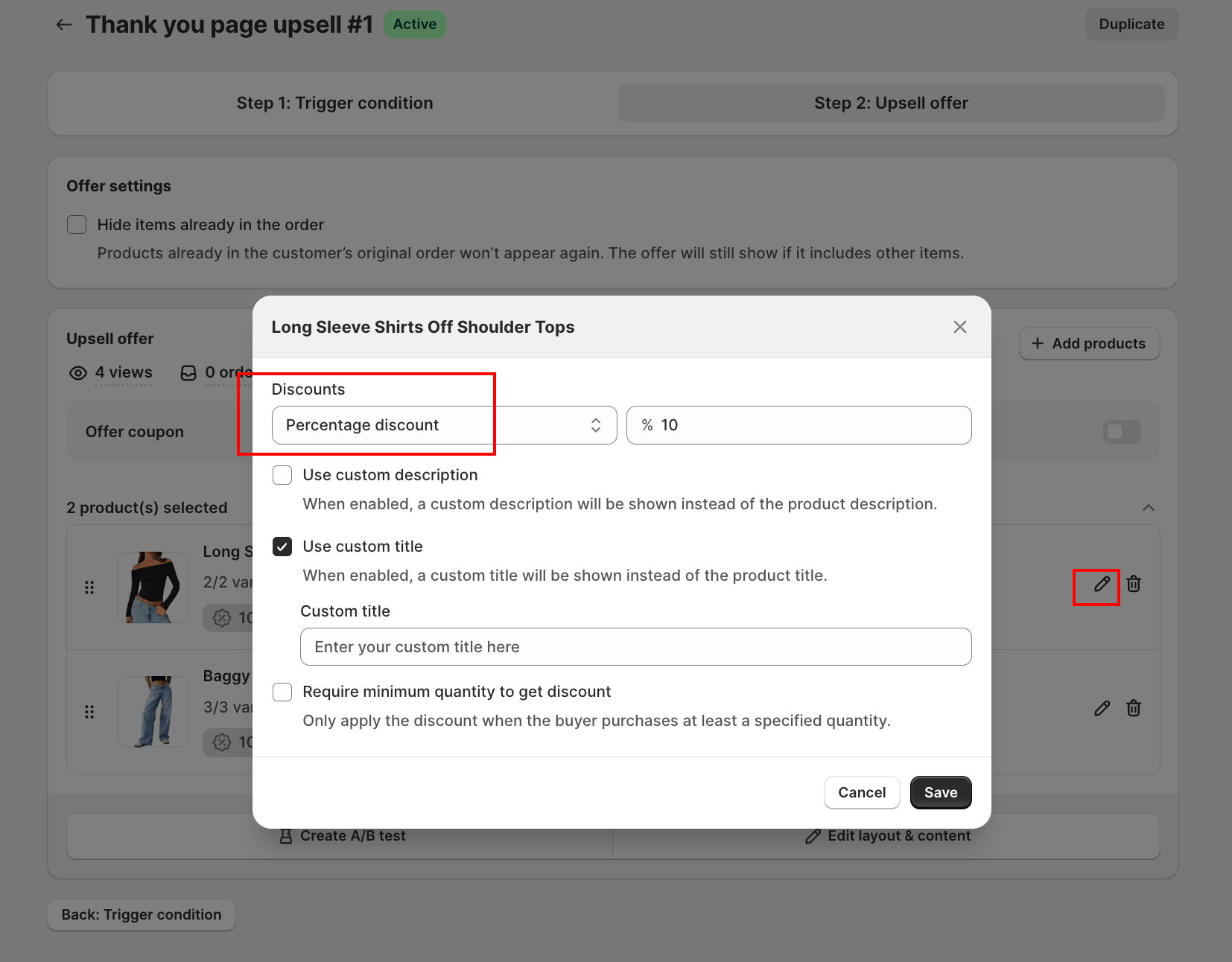
| Setting | Description |
|---|---|
| Discount type |
|
| Use custom description | Show a custom description instead of the default product description. |
| Use custom title | Show a custom title instead of the default product title. |
| Require minimum quantity to get discount | Only apply the discount when the buyer purchases at least a specified quantity. |
Click Save when done.
- Use the Summary panel on the right to review included items, then click Preview offer to see how it appears to customers.
Personalizing header text with variables
The offer header text supports dynamic variables that are replaced with real order data at the time the offer is shown:
| Variable | Replaced with |
|---|---|
{{first_name}} | Customer's first name |
{{last_name}} | Customer's last name |
To insert a variable, click the { } button next to the header text field and select the variable from the list.
What happens when multiple offers qualify?
If more than one Order Status Page upsell offer matches the same order, the app shows only one: the offer with the highest priority (priority 1 wins). Newly created offers are automatically placed at priority 1; you can reorder at any time from the Offer list page via Manage priority.